Financial analyst warns U.S. debt default would trigger a Great Depression


October 6, 2013 – WASHINGTON – As
we close out the first week of the government shutdown, a bigger and
even more toxic disaster is creeping into the fray that could make the
contentious budget battle look like a slap fight. The Treasury
Department said Uncle Sam will be broke by October 17th unless something
is done. Treasury secretary Jack Lew hammered home that point Thursday
by releasing an unusually ominous statement that warned of catastrophic
risks to the economy. House Speaker John Boehner has said he won’t let
the government default on its debt, but until steps are taken to raise
the nation’s debt ceiling, the possibility of default is still
theoretically alive. “If they seriously default on the debt, what we’re
really talking about is a depression,” says veteran financial sector
analyst Richard Bove, VP of research at Rafferty Capital Markets. In
the news video he explains how the fallout would be a lot worse than the
recession suffered in 2008 and the aftershocks would be felt for at
least a decade. “The first thing you have to do is look at who holds the
debt,” Bove says of the $16.7 trillion of bonds the U.S. currently has
outstanding. “The first, biggest owner (of U.S. debt) is the social
security fund, so you’d have all of these people who are receiving
social security payments who now have to question whether they’ll get
their payments.” Clearly, that would cause a huge disruption to millions
of Americans. But Bove says that is only the beginning since the second
biggest holder of Treasuries (at about 12% of the total) is the Federal
Reserve, which has “91% of its assets backed by U.S. government debt.”
If the value of those assets were to decline, which they indisputably
would in a default, Bove says the net effect would be that “we have
nothing of value backing the dollar.” They’re actually “Federal Reserve
Notes’ as well as the number one asset of choice held in the reserves of
governments and businesses all over the world.
 A plunge in Treasuries would
also devalue the dollar, which would instantly make everything we buy
more expensive, and in turn destabilize countries and economies all over
the world. “Eleven-percent of all U.S. debt is owned by the Chinese,’”
he says. “That $1.4 trillion represents about a third of the reserves of
the People’s Bank of China, so what we’ve now said to the PBOC is,
‘Watch out, we may hit the value of a third of your assets and you can’t
do anything about it.’” And this isn’t even half of it. As Bove
explains, money market funds, which are used by virtually every person
with a savings or investment account, are also “heavily loaded with
Treasuries.” So are most bond funds and so-called balanced funds (growth
and income funds). A default on U.S. debt would not only cause money
funds to “break the buck” –not be able to pay 100-cents for each dollar
invested)– but would also cause forced selling by countless other funds
that are mandated to immediately sell any asset that has defaulted.
“That could easily put $750 billion of Treasuries on to the market” Bove
says, inferring that rates interest rates would also spike, and normal
borrowing/lending transactions would end. Speaking of banks, the U.S.
banking industry holds over a trillion dollars worth of Treasuries and
another trillion dollars of government issued mortgage-backed
securities, Bove says. If those bonds were to go down in value, he says
the banks would also have to “write down the value of those assets and,
in essence, wipe out their equity.” It would make the banks insolvent.
To summarize, Bove asserts that a default is unthinkable because it
would trigger a huge reduction in the value of U.S. debt, which would go
beyond disrupting social security payments. A default would upend money
markets, destroy bond funds, slam the brakes on lending, cause interest
rates to spiral, make our banks insolvent, and deal a blow to our
foreign trading partners and creditors around the globe; all of which
would throw the U.S. and the world into economic disarray. -Yahoo News
A plunge in Treasuries would
also devalue the dollar, which would instantly make everything we buy
more expensive, and in turn destabilize countries and economies all over
the world. “Eleven-percent of all U.S. debt is owned by the Chinese,’”
he says. “That $1.4 trillion represents about a third of the reserves of
the People’s Bank of China, so what we’ve now said to the PBOC is,
‘Watch out, we may hit the value of a third of your assets and you can’t
do anything about it.’” And this isn’t even half of it. As Bove
explains, money market funds, which are used by virtually every person
with a savings or investment account, are also “heavily loaded with
Treasuries.” So are most bond funds and so-called balanced funds (growth
and income funds). A default on U.S. debt would not only cause money
funds to “break the buck” –not be able to pay 100-cents for each dollar
invested)– but would also cause forced selling by countless other funds
that are mandated to immediately sell any asset that has defaulted.
“That could easily put $750 billion of Treasuries on to the market” Bove
says, inferring that rates interest rates would also spike, and normal
borrowing/lending transactions would end. Speaking of banks, the U.S.
banking industry holds over a trillion dollars worth of Treasuries and
another trillion dollars of government issued mortgage-backed
securities, Bove says. If those bonds were to go down in value, he says
the banks would also have to “write down the value of those assets and,
in essence, wipe out their equity.” It would make the banks insolvent.
To summarize, Bove asserts that a default is unthinkable because it
would trigger a huge reduction in the value of U.S. debt, which would go
beyond disrupting social security payments. A default would upend money
markets, destroy bond funds, slam the brakes on lending, cause interest
rates to spiral, make our banks insolvent, and deal a blow to our
foreign trading partners and creditors around the globe; all of which
would throw the U.S. and the world into economic disarray. -Yahoo News
October jinx: October
is historically the worst month to play chicken with global financial
markets. So the U.S. deficit spending reaching its ceiling limit on
October 17, 2013 may already be the worst thing in the world for jittery
financial markets that could be spooked by a miscalculation. What’s the
first thing that comes to mind when investors hear the word October?
Ghoulish Halloween costumes? Nope. Stock market crashes? Bingo! When it
comes to wealth suddenly disappearing, October can be diabolically
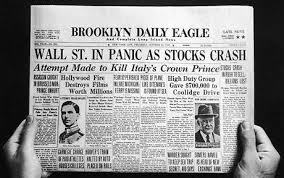
frightful. The stock market crash of 1929 that led to the Great
Depression occurred in October. So did the 22.6% plunge suffered by the
Dow Jones industrial average in 1987 on “Black Monday.” The
scariest 19-day span during the 2008 financial crisis also went down in
October, when the Dow plunged 2,675 points after investors fearing a
financial collapse went on a panic-driven stock-selling spree that
resulted in five of the 10 biggest daily point drops in the iconic Dow’s
123-year history. October is “known as the jinx month because of the crashes,”
according to Stock Trader’s Almanac, the bible for seasonal stock
market statistics and trading strategies. Coincidently, Atlas Shrugged
Part II, about the financial collapse of America and the institution of
martial law, was also released in October of 2012. –USA

No comments:
Post a Comment